Top 10 Best Peak Climbing In Nepal
We just caught you browsing list of Best Climbing Peaks in Nepal!
It’s good that you are planning holidays on mountain out of your busy schedule. You might get lost within multiple options of peak climbing in Nepal. Nepal Mountaineering Association (NMA) manages the list of peak climbing in Nepal.
They update the entire details of the group and permit. Also for the higher expedition, you need a permit from immigration. The list of NMA Climbing Peaks consists of 33 different mountains. There are two different climbing peak groups.
NMA Climbing Peak Group ‘A’
NMA Climbing Peak Group ‘B’
Here Group A consists of 15 summits out of 33. And Group B consists of 18 summits. Permit rates are slightly different on the basis of the group. In past, the cost used to be on the basis of the number of climbers.
More the number, cheaper will be the permit cost. But from recent changes in permit it is different now. Per person cost is set, group size doesn’t matter.
You can find the updated cost table below. Apart from this, there are some other higher-level expeditions of eight-thousanders and several peaks which are not included on NMA. On this blog, we will shortlist peak climbing only. Ama Dablam is an exception. Being an expedition we shortlist that mountain here. This is because of its popularity.
What is Climbing Peak?
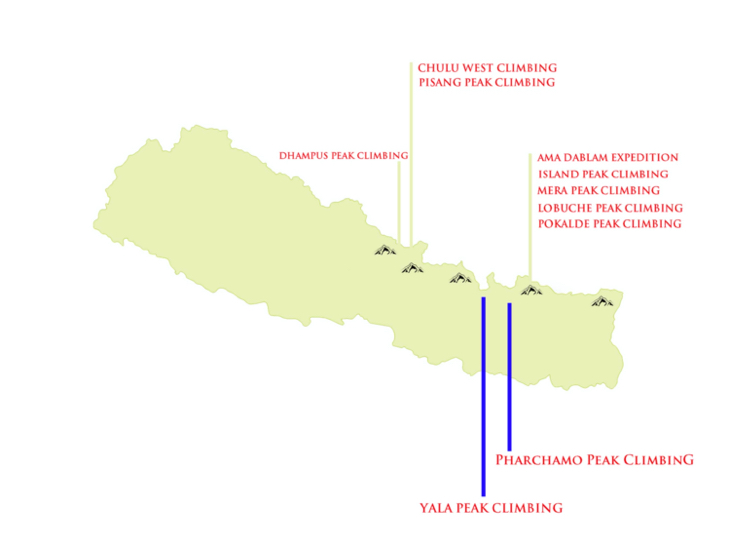
A climbing peak is a peak with an elevation limit of 6500 m from sea level which is easier to climb without special equipment and long training. Remember, for Everest Expedition you need to spend more than two weeks for training and acclimatization in base camp.
This differs vastly from the term expedition. As maximum climbing periods for a peak is set less than five days. In general, this is a small twist in your trekking. The nearest peak for climbing from Kathmandu is Yala Peak in Langtang.
It is illegal to climb a peak without obtaining a climbing permit. NMA issues permit upon request. A garbage deposit is required and refundable. Without any further due here is the list of the top 10 best climbing peaks in Nepal.
1. Island Peak
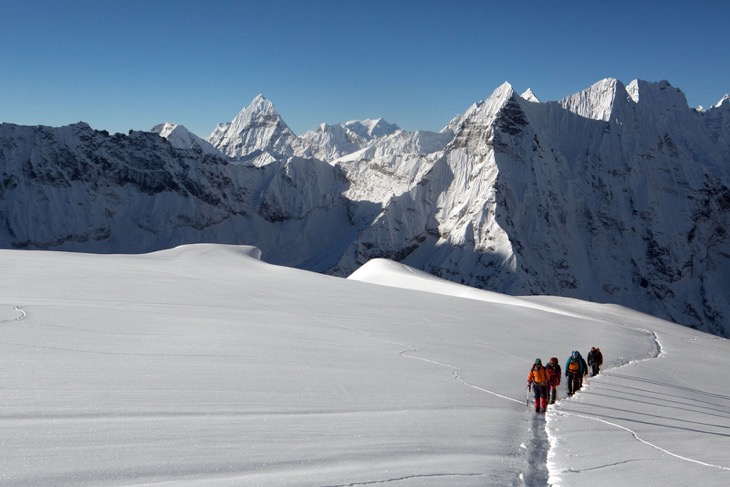
This is the first choice of climbers. It is often known as Imja Tse. It lies close east to Everest base camp trekking trail. Eventually you can merge Everest trek with island peak climbing.
Standard elevation of this peak is 6189 m from the sea level. It offers a magnificent view of other high Himalayas around it including Mount Makalu. Below are the fast facts about Island Peak.
| Location | Solukhumbu |
| Altitude | 6189 m |
| Number of Climbing Days | 1 to 2 days |
| Difficulty Grade | PD (Little Difficult) |
| Best Time | April to May and October to November |
2. Mera Peak
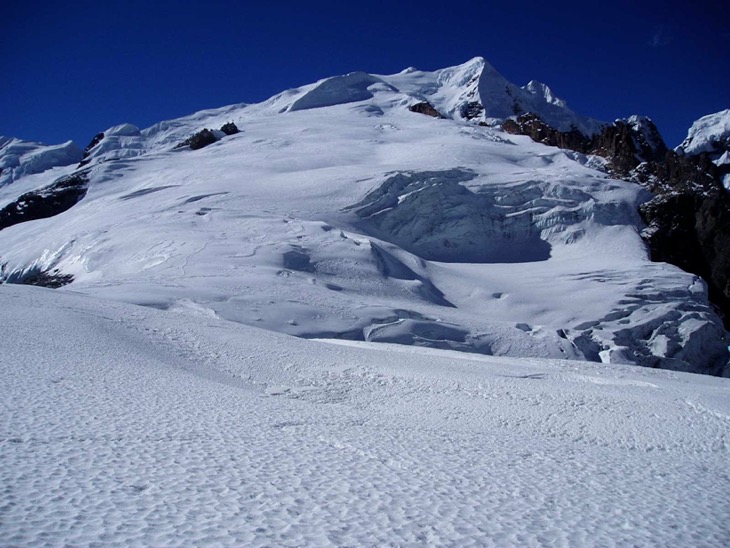
Located Close southeast of Island Peak, Mera Peak is another famous peak for climbing. Access is little difficult. Trek to the base camp starts from Lukla. Or you have to traverse Ama Lapcha Pass from Chukung. Summit of Mera Peak offer brilliant view of Everest and Lhotse. This is considered as the highest climbing peak of Nepal. Standard elevation of this peak is 6470 m from sea level. Despite of it’s elevation and access, climbing route is fairly easy. Below are the fast facts about Mera Peak.
| Location | Solukhumbu |
| Altitude | 6470 m |
| Number of Climbing Days | 3 to 4 days |
| Difficulty Grade | PD (Little Difficult) |
| Best Time | September to November |
3. Lobuche East Peak
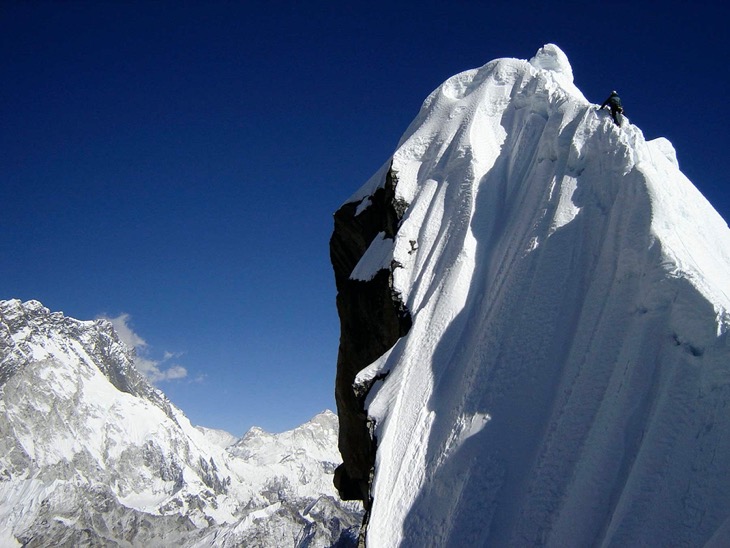
More closer to the everest base camp trekking trail, this is an excellent alternative over Island Peak. It is on the village named Lobuche. It is often spelled as Lobuje. There are two different peaks, Lobuche East and Lobuche West. Technically west summit is harder to approach. Lobuche East is suitable for novice climber. Summit offers excellent view of Everest’s southwest face along with Lhotse and Makalu. Standard elevation this peak is 6119 m from sea level. Below are the fast facts about Lobuche East Peak.
| Location | Solukhumbu |
| Altitude | 6119 m |
| Number of Climbing Days | 3 Day |
| Difficulty Grade | F (Fairly Easy) |
| Best Time | Mid March to May and October to Mid December |
4. Yala Peak
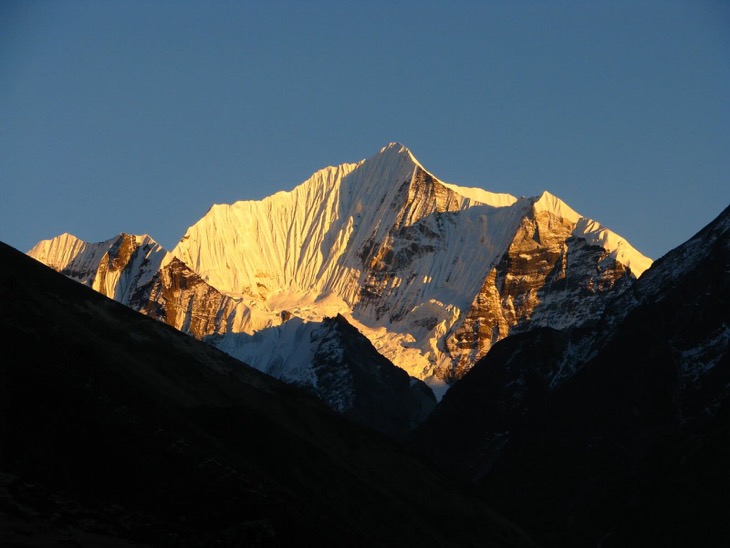
It is the nearest and easiest climbing peak. It is located at Langtang, close north to Kathmandu. From the summit you can witness the existence of Mount Sisapangma. Sisapangma is the fourteenth highest mountain in the world, located in Tibet autonomous state of China. Standard elevation this peak is 5732 m from sea level. Below are the fast facts about Yala Peak.
| Location | Langtang |
| Altitude | 5732 m |
| Number of Climbing Days | 1 to 2 days |
| Difficulty Grade | F (Fairly Easy) |
| Best Time | March to May and October to November |
5. Chulu West Peak
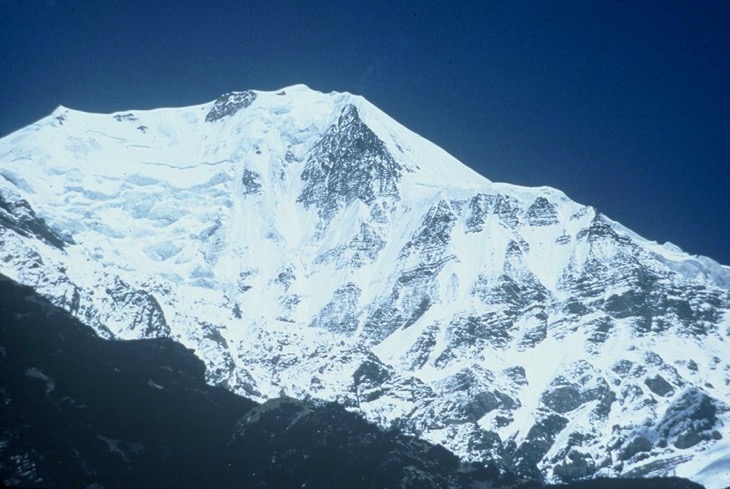
Chulu peak is located close north to Annapurna Circuit Trail. Similar to Lobuche, there are two summits of Chulu, Chulu East and Chulu West. Separate permits are needed for each. From the summit of Chulu West, Mount Dhaulagiri and Annapurna I both are visible. ‘Annapurna I’ is technically very hard. It is the tenth highest mountain the world. Further northwest of Chulu lies Damodar Himal Range from Upper Mustang. Standard elevation this peak is 6419 m from sea level. Below are the fast facts about Chulu West Peak.
| Location | Annapurna |
| Altitude | 6419 m |
| Number of Climbing Days | 5 to 6 Days |
| Difficulty Grade | PD (Little Difficult) |
| Best Time | March to April and October to November |
6. Pisang Peak
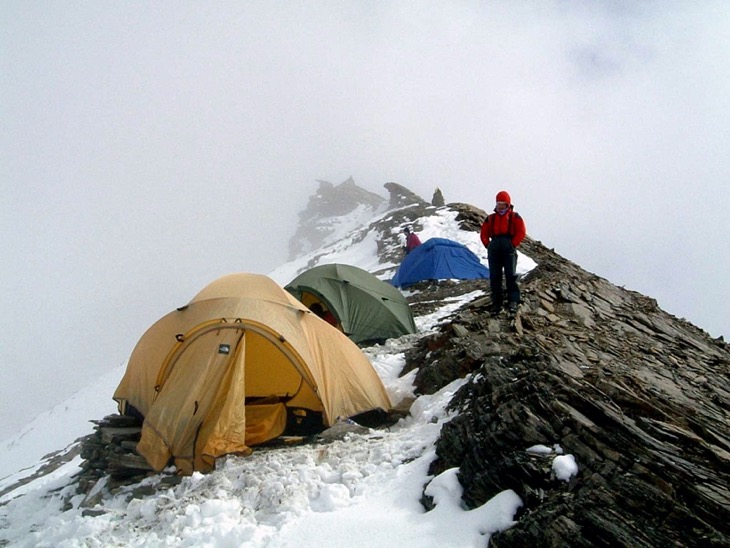
It also lies close north to Annapurna Circuit Trail. If you compare it with Chulu Peak then it lies east to Chulu peak. It is very close to village of Pisang. Summit ridge is little technical. You need to be considerably more fit. Also it is better to have some previous mountaineering experiences. This is famous climbing peak in western Nepal. Standard elevation of this peak is 6092 m from the sea level. Below are the fast facts about Pisang Peak.
| Location | Annapurna |
| Altitude | 6092 m |
| Number of Climbing Days | 2 to 3 Days |
| Difficulty Grade | PD+ (Difficult) |
| Best Time | March to April and September to November |
7. Dhampus Peak
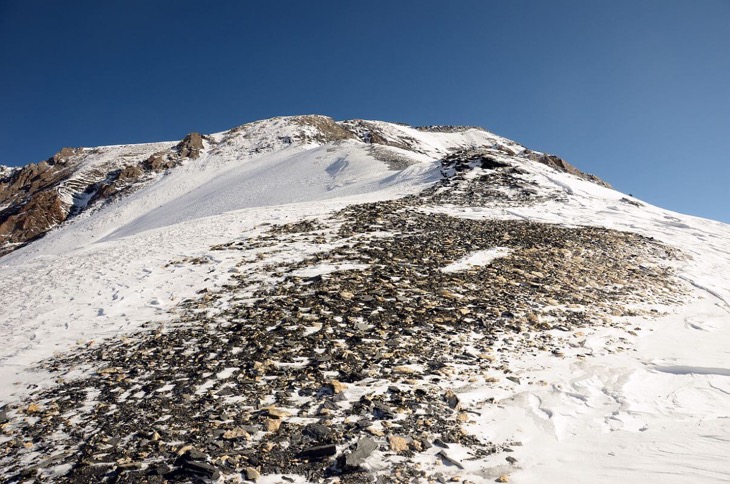
This is major attraction of Dhaulagiri Circuit Trek. As many trekkers track summit of Dhampus peak as side trip of Dhaulagiri Circuit. This is easy peak for climbing. It is located on the northeast of Dhaulagiri I. View from the summit is unmatched. It offers panorama of more than 30 individual peaks. Notable summit viewable are Machhapuchhre, Annapurna I, Manaslu, Dhaulagiri and Tukuche. Standard elevation this peak is 6012 m from sea level. Below are the fast facts about Dhampus Peak.
| Location | Dhaulagiri |
| Altitude | 6012 m |
| Number of Climbing Days | 2 Days |
| Difficulty Grade | PD (Little Difficult) |
| Best Time | March to April and October to November |
8. Pharchamo Peak
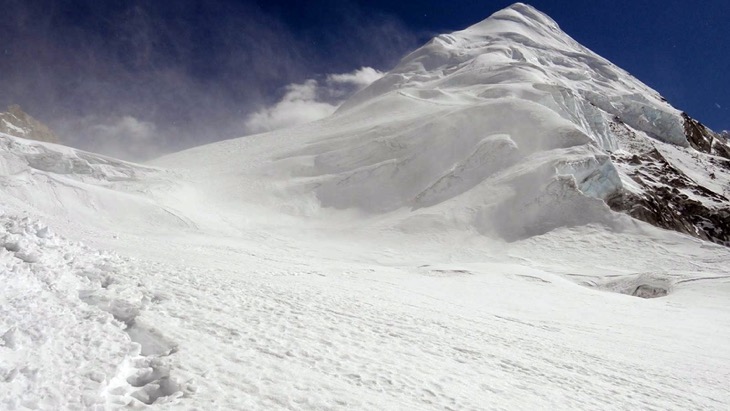
It is located on Rolwaling Valley, a valley in the rain shadow of Everest and Langtang. Very few trekkers explore this area. Access is fairly difficult, as you need traverse Tashi Lapcha Pass from Thame. Also biggest glacial lake of Tso Rolpa is a part of the trail. Ramdung peak is a close neighbor of Pharchamo. From the summit, view of Gaurishankar is rewarding. This is of very short climbing duration as well. Standard elevation this peak is 6187 m from sea level. Below are the fast facts about Pharchamo Peak.
| Location | Rolwaling Valley |
| Altitude | 6187 m |
| Number of Climbing Days | 1 Day |
| Difficulty Grade | F (Fairly Easy) |
| Best Time | March to April and October to November |
9. Pokalde Peak
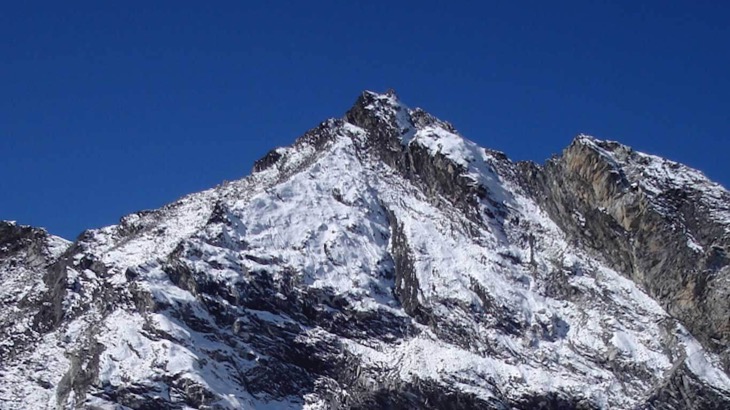
This is the shortest climbing peak. Climbing period is of half day. It is attached with Everest Three Pass Trekking Trail. It is very near to Khongma La Pass. It can be a good alternative to Island Peak and Lobuche Peak if you are looking something easy. You will also encounter with other regular three pass trekkers. Standard elevation this peak is 5806 m from sea level. Below are the fast facts about Pokalde Peak.
| Location | Solukhumbu |
| Altitude | 5806 m |
| Number of Climbing Days | 1 Day |
| Difficulty Grade | F (Fairly Easy) |
| Best Time | April to May and September to October |
10. Mount Ama Dablam
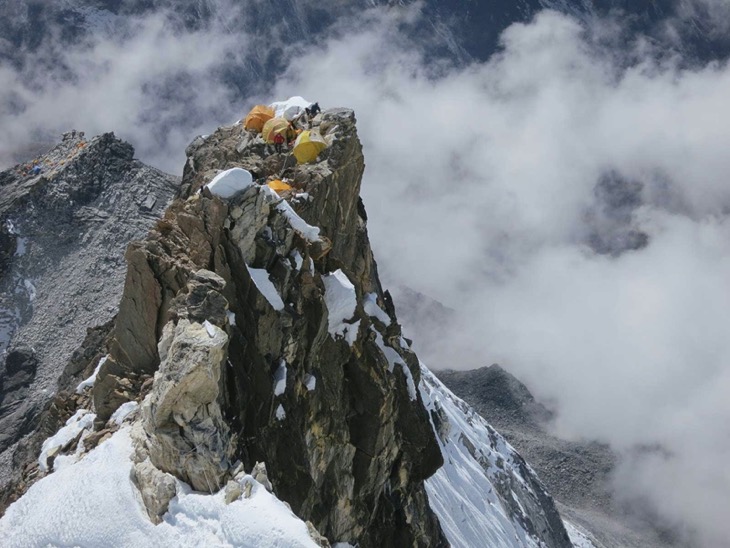
This is the most technical peak ever, opened for climbing. People often call it the beautiful mountains from all over the word. Some people even said that Mount Ama Dablam is the Matterhorn of Himalayas. With climbing grade TD it is extremely difficult to make your way to summit. As a climber you will face snowy slopes and ice cliffs as a part of climbing route. This is the third popular permitted peak for climbing in Nepal. This is a long expedition though. You have to issue different permits from Immigration.
| Location | Solukhumbu |
| Altitude | 6856 m |
| Number of Climbing Days | 12 to 15 Days |
| Difficulty Grade | TD (Extremely Difficult) |
| Best Time | April to May and September to October |
Choose right peak for you. Do some research! Make sure that ‘fairly easy’ doesn’t mean simple climb. You need to be familiar with use of climbing gears.
A short training of one hour is good enough to understand your climbing equipments. For Ama Dablam, you should be way more experienced. Short training doesn’t work and we strongly recommend couple of mountain experience before.
Remember this is one of the most technical expeditions in Nepal. You can also contact us for more information regarding peak climbing in Nepal.
There are some climbing peaks with zero royalty. On the far west section of Nepal, Api and Saipal peak are completely free of charge.
Peaks below 8000 m elevation were completely free permit for Nepali Passport Holders. Now with change, everyone needs to pay a certain amount.

